

Since the dawn of advertising, models & ambassadors were the driving force behind brand love & engagement. The modelling industry evolved in sync with societal advancements in technology, starting with the invention of the light bulb, which made photography possible, moving through the era of television to the rise of smartphones and the internet. Modelling has been integral to the creative industry’s development. So how is this system for collaboration still so flawed?
The Birth of Agencies
The 1960s marked a turning point for the advertising industry with the establishment of modelling agencies. These organisations spread internationally due to differing legal landscapes across countries. They operated on the core principle that a robust network increases net worth, attracting more clients, bookings and revenue.
The Advent of Social Media
The 2000s brought a significant disruption with the advent of smartphones and social media platforms. Agencies lost their exclusivity as the sole intermediaries between models and advertisers for two main reasons:
- Innovative content and polished social media presence allowed models to engage with advertisers directly.
- Marketers found it increasingly convenient to negotiate terms directly with models, effectively side-lining the traditional middlemen.
The Present Scenario
Today, agencies still offer what they consider valuable services: industry knowledge, networking, skill development, management and promotion. Yet, the prevailing organisational system used by agencies (or lack thereof) has become a significant pain point for represented Creatives. These systemic challenges are often ignored by industry leaders, offer no long-term solutions because they are so deeply entrenched in their work culture.
The Genesis of Chaos
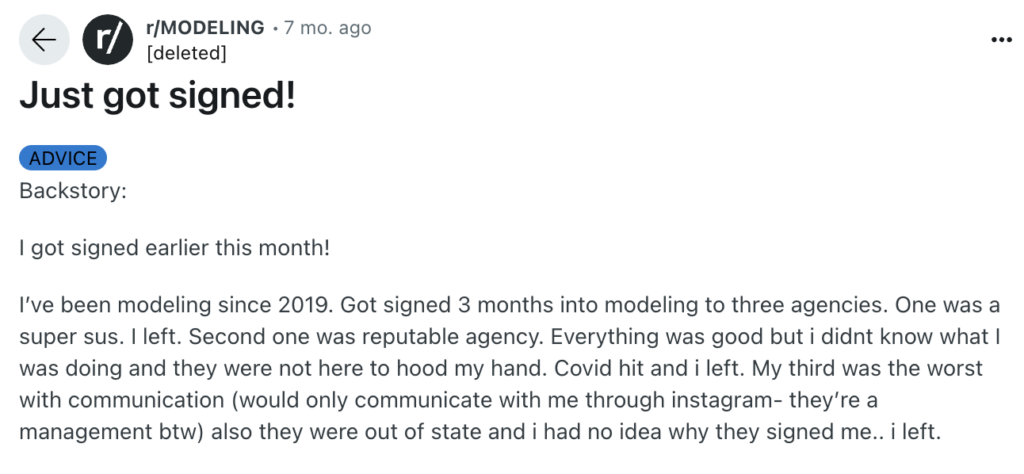
The root of the chaos lies in the old organisational systems inherited from the traditional agency-led model. These systems were never truly built to benefit Creatives. Their structure maximised dependencies on agencies by requiring clients to pay the agencies first, leading to substantial payment delays and financial insecurities for Creatives. Furthermore, the antiquated methods of doing business—such as the scattered communication, the delayed payment systems, or the booking processes—have all perpetuated detrimental business practices.
The inconsistent and opaque modes of communication, often conducted through emails, WhatsApp, or direct messages, creates informational black holes. Payments channelled through inefficient and delayed invoicing systems have built layers of financial instability. Booking procedures, typically mired in paperwork and vague commitments, exacerbated uncertainties.
All these elements, originally designed to consolidate agency control, have instead strained relationships between agencies and Creatives, causing tremendous stress and loss of focus for the latter.
The Outcome
The current situation has led to alarming statistics: 80% of full-time Creatives report experiencing continuous stress anxiety, and confusion, diverting them away from their true creative passions. In the old system, payment delays to Creatives are averaging 190 days.* The old system creates isolation and doesn’t connect nor gives the resources to Creatives to access information about their jobs creating a lack of control over work and career. Leaving them feeling misunderstood, powerless and distrustful.
The Solution
This is why CREATIVESAPP was born. In this new age, Creatives must regain control over their careers. They must be empowered by consistent, timely payments so they can invest their mental energy into their creative work rather than juggling finances. They must utilise systems that unify their operations, connect them transparently with their agencies while taking care of admin and other tedious tasks. Importantly, creatives need to recognise a fundamental truth: brands often seek collaborations with you as a Creative specifically. This empowers Creatives to direct brands to book them from CA, to safeguard their interests, allowing for better control over negotiations, payments, organisation and contractual terms.
*2022 LinkTree Creator Report